
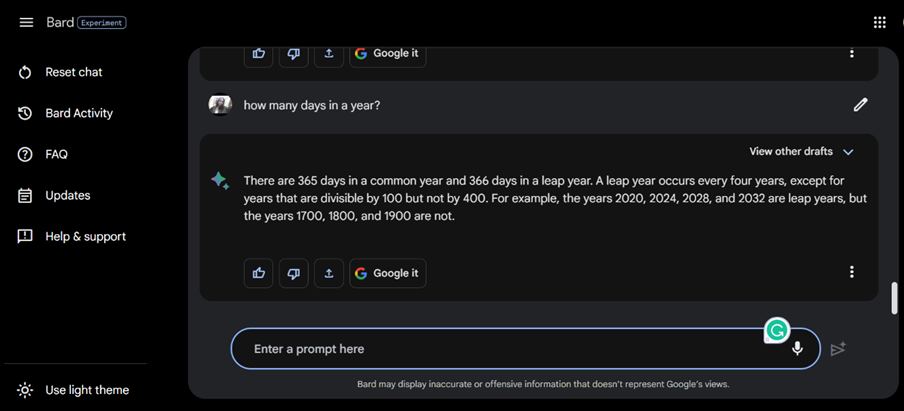
Google Bard is an AI chatbot, developed by Google that uses large language models (LLMs). Large language models are potent AI systems that can comprehend and produce language similar to humans. They can produce responses, translate languages, and even compose news pieces since they have been taught enormous amounts of text data.
LLMs (large language models) are transforming the world in a variety of ways. They are facilitating multilingual communication, enabling more enjoyable and natural interactions with machines, and automating a great deal of laborious and time-consuming work. They also accelerate scientific research and foster new developments in fields like medicine, finance, and education. As these technologies advance, it will be crucial to control these risks as there are worries about how LLMs may affect employment, privacy, and security.
Bard is a much more potent AI assistant than Google Assistant, despite not having fully replaced it.
It is trained on a massive dataset of text and code, and can generate text, translate languages, write different kinds of creative content, and answer your questions in an informative way. Bard is still under development, but it has learned to perform many kinds of tasks, including:
-
Following your instructions and completing your requests
thoughtfully.
-
Using its knowledge to answer your questions in a comprehensive
and informative way, even if they are open ended, challenging, or
strange.
-
Generating different creative text formats, like poems, code,
scripts, musical pieces, email, letters, etc.
Why this page is commercially useful
These notes frame the article as a decision page, not just a background explainer.
Why this guide matters
Google Bard is an AI chatbot, developed by Google that uses large language models (LLMs). Large language models are potent AI systems that can comprehend and produce language si…
Best for
Start here if you are trying to understand a.i advancements before choosing specific tools or vendors.
Next action
Use the related app links below to turn the guide into an actual tool comparison instead of stopping at theory.
Relevant AI apps to evaluate next
These app pages give readers a practical follow-on step after the guide: compare the tools that fit the workflow described above.