The emergence of new technologies has always been a catalyst for transformative change in society. In recent years, two technological advancements, ANI (Artificial Narrow Intelligence) and GPTs (Generative Pre-trained Transformers), have captured the imagination of both experts and enthusiasts alike. These groundbreaking technologies are reshaping the way we interact with machines, process information, and even perceive the boundaries of human and artificial intelligence.
Artificial Narrow Intelligence, or ANI, represents a significant leap forward in the field of artificial intelligence. Unlike its predecessor, Artificial General Intelligence (AGI), which aims to mimic human cognitive abilities across a wide range of tasks, ANI is designed to excel at specific, narrow tasks. This specialization allows ANI to demonstrate remarkable proficiency in areas such as language translation, image recognition, and even strategic decision-making in certain domains. ANI's ability to process large volumes of data and perform complex computations with speed and precision has positioned it as a cornerstone of modern technological innovation.
On the other hand, Generative Pre-trained Transformers, or GPTs, have garnered attention for their ability to generate coherent and contextually relevant text. These sophisticated language models, developed by OpenAI, have demonstrated an unprecedented capacity for natural language understanding and generation. Equipped with vast amounts of pre-existing knowledge and linguistic patterns, GPTs have been utilized in various applications such as language translation, content creation, and even dialogue generation. The evolution of GPTs has not only elevated the capabilities of machine-generated content but has also sparked discussions about the ethical implications and potential misuse of such powerful language models.
The convergence of ANI and GPTs has given rise to a technological landscape where machines are not only capable of performing specific tasks with precision but also of comprehending and generating human-like language. This has profound implications across a spectrum of industries, from healthcare and finance to entertainment and education. The fusion of ANI and GPTs has enabled the development of chatbots with advanced conversational abilities, virtual assistants that can comprehend and respond to complex queries, and language translation services that bridge linguistic barriers with unprecedented accuracy.
Moreover, the symbiotic relationship between ANI and GPTs has accelerated the pace of innovation in fields such as autonomous vehicles, medical diagnostics, and personalized content creation. The ability of ANI to process real-time data and make split-second decisions, combined with GPTs' capacity to understand and generate human-like language, has unlocked new possibilities in human-machine interaction and collaborative problem-solving.
However, as with any technological breakthrough, the integration of ANI and GPTs raises ethical and societal concerns. The potential for misinformation, privacy breaches, and the displacement of human labor are just a few of the challenges that accompany the widespread adoption of these technologies. The responsible and ethical deployment of ANI and GPTs necessitates a careful consideration of their impact on individuals, communities, and the fabric of society at large.
The advent of ANI and GPTs represents a paradigm shift in the capabilities of artificial intelligence and language processing. As these technologies continue to evolve and permeate various aspects of our lives, it is imperative to navigate their implications with prudence and foresight. The synergy between ANI and GPTs has the potential to redefine the boundaries of human-machine collaboration and usher in a new era of technological innovation, yet it also demands a thoughtful approach to their ethical and societal ramifications.
Now let’s take a deeper depth into understanding GPTs
Contents
- What are GPTs?
- ChatGPT vs GPT: Explaining the Difference
- Advantages of GPT
- How are businesses utilizing GPTs?
- How to create GPTs with OpenAI’s GPT Builder?
- How to create your own custom GPTs?
- Limitations of GPTs
What are GPTs?
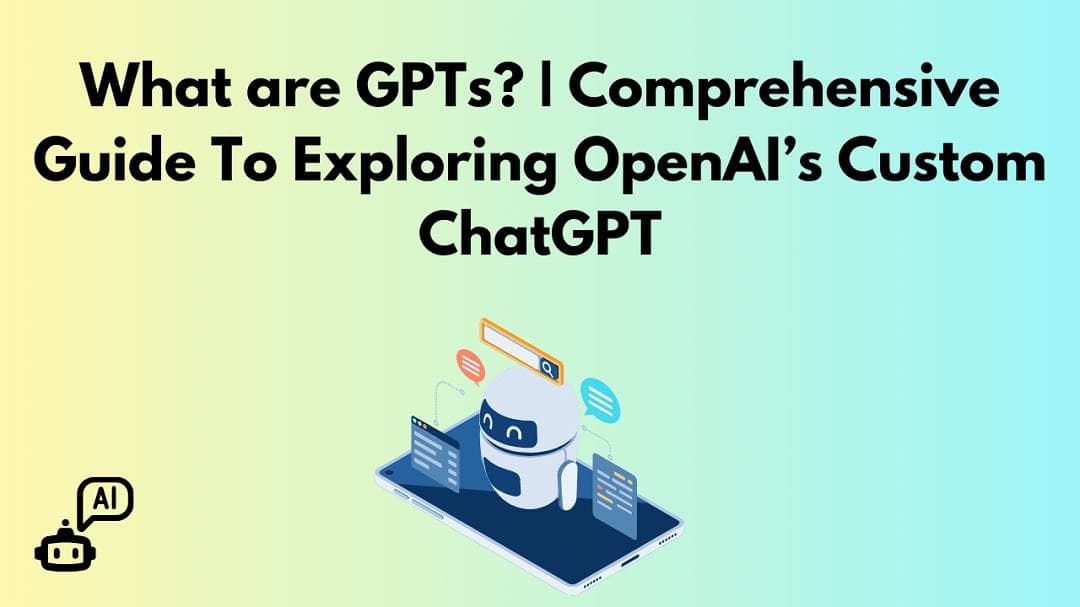
Alright, so you know those super smart AI language models that can write like a real human? Well, those are called Generative Pre-trained Transformers, or GPTs for short. They're like the rockstars of the AI world because they've got this amazing knack for understanding and producing human-like text.
Developed by OpenAI, GPTs have garnered widespread attention and acclaim for their unparalleled ability to comprehend and generate human-like text.
At the core of GPTs lies a sophisticated neural network architecture known as the transformer model. This architecture enables GPTs to process and generate text by learning complex patterns and relationships within language data. GPTs are pre-trained on vast corpora of text from the internet, allowing them to acquire a deep understanding of natural language and linguistic nuances. This pre-training phase equips GPTs with a wealth of knowledge, enabling them to generate coherent and contextually relevant text across a wide range of topics and styles.
One of the most remarkable features of GPTs is their ability to perform language generation tasks with remarkable fluency and coherence. Whether it's completing sentences, composing stories, or even generating code, GPTs exhibit an impressive capacity to produce text that closely resembles human-authored content. This capability has revolutionized content creation, automated writing tasks, and even facilitated the development of conversational agents and virtual assistants with advanced language processing abilities.
The applications of GPTs span diverse domains, from natural language understanding and generation to language translation and content recommendation. In the field of healthcare, GPTs have been leveraged to analyze medical records, generate patient reports, and assist in clinical decision-making. Their proficiency in understanding and processing medical terminology has paved the way for more efficient and accurate healthcare workflows.
Furthermore, GPTs have played a pivotal role in breaking down language barriers through their language translation capabilities. By comprehending and translating text across multiple languages, GPTs have facilitated cross-cultural communication and accessibility to information on a global scale. This has not only enhanced international collaboration but has also fostered inclusivity and diversity in the digital landscape.
ChatGPT vs GPT: Explaining the Difference
When we compare ChatGPT and GPT, it's like looking at two siblings with some similarities but also some important differences. Let's break it down in simpler terms.
Technical Stuff
Like a younger sibling, ChatGPT is dependent on the support of its bigger brothers, GPT-3.5 Turbo and GPT-4. These serve as ChatGPT's equivalent of the brains behind the scenes, enabling it to carry out its assigned duties and conduct talks. Nevertheless, the more recent ChatGPT is less able to learn new things than the more advanced GPT models.
How They Work
Think of GPT-3 as the big brother who knows a lot about a wide range of things. It's been taught with a lot of information, so it's pretty smart. ChatGPT, on the other hand, is like the little brother who's been taught to do one specific thing really well—having conversations. It's not as good at other stuff, but it's great at chatting.
What They Can Do
GPT-3 can do a lot of different tasks, like translating languages, summarizing text, and answering questions. It's like a jack-of-all-trades. ChatGPT, however, is mainly focused on having conversations. It's like the friend you go to when you want to chat about something.
Getting Better
Now, let's talk about how they're growing up. GPT-4 is like the super-smart older sibling who can do even more amazing things than GPT-3. It's like an upgrade, making the whole family even more impressive.
So, in simple terms, ChatGPT and GPT are like siblings with different talents. GPT is the all-rounder, while ChatGPT is the expert at chatting. As they grow and evolve, they become even more skilled at what they do.
Advantages of GPTs
Here are a few advantages of using GPT in your day-to-day lives
- Helps with Writing: GPT can help people write better by giving suggestions and ideas.
- Answering Questions: It can answer questions by understanding and analyzing information from a lot of sources.
- Language Translation: GPT can help translate languages, making it easier for people who speak different languages to understand each other.
- Summarizing Text: GPT can read a lot of text and then summarize it, making it easier for people to understand long articles or documents.
- Learning New Things: It can be trained to learn new things, so it keeps getting smarter and more useful over time.
How are businesses utilizing GPTs?
Companies are using GPTs in various ways to improve their operations and provide better services. Here are some simple examples:
- Internal Training and Assistance: Companies are using GPTs to create internal tools that help employees learn new skills, understand company policies, and get quick answers to their questions without needing to search through lots of documents.
- Customer Support: GPTs are being used to power chatbots that can interact with customers, answer common questions, and provide basic support, freeing up human agents to handle more complex issues.
- Content Creation: Some companies are using GPTs to generate content such as product descriptions, marketing materials, and even news articles, saving time and effort in the content creation process.
- Personalized Services: GPTs can be customized to provide personalized recommendations and assistance to customers based on their preferences and behavior, improving the overall customer experience.
- Task Automation: GPTs are being used to automate repetitive tasks, such as data analysis, report generation, and scheduling, allowing employees to focus on more strategic and creative work.
How to create GPTs with OpenAI’s GPT Builder?
Coding knowledge is not necessary for the simple procedure of creating a GPT. ChatGPT's OpenAI GPT Builder offers an easy-to-use interface for creating personalised GPTs.
Step 1: login to OpenAI’s GPT
Why this page is commercially useful
These notes frame the article as a decision page, not just a background explainer.
Why this guide matters
The emergence of new technologies has always been a catalyst for transformative change in society. In recent years, two technological advancements, ANI (Artificial Narrow Intell…
Best for
Start here if you are trying to understand a.i advancements before choosing specific tools or vendors.
Next action
Use the related app links below to turn the guide into an actual tool comparison instead of stopping at theory.
Relevant AI apps to evaluate next
These app pages give readers a practical follow-on step after the guide: compare the tools that fit the workflow described above.