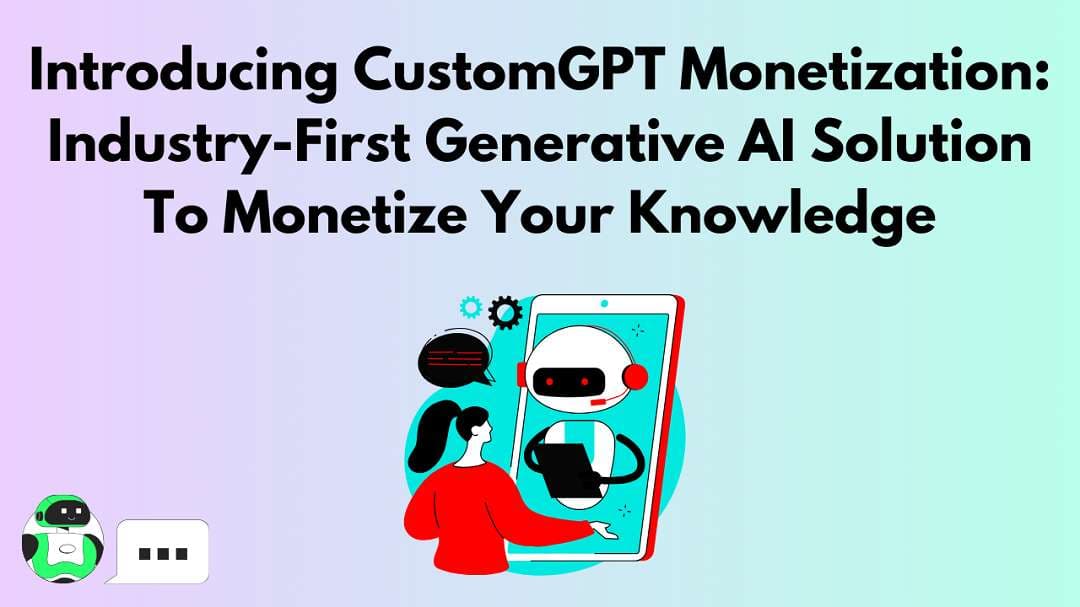
CustomGPT has recently introduced an industry-first AI technology that lets you make money out of your expertise by building and selling personalized chatbots.
CustomGPT: An Overview
CustomGPT is an AI-powered chatbot developed by OpenAI. It is
built on the foundation of ChatGPT, which is a language model
designed to generate conversational responses based on input
prompts. CustomGPT takes this a step further by allowing developers
to build and query their own chatbots using their own business
content.
CustomGPT is the simplest no-code platform that allows you to monetize your knowledge and intelligence, and lets you sell custom generative AI chatbots.
OpenAI's CustomGPT is an AI-powered chatbot that enables companies and individuals to create and question custom chatbots using their own corporate content. It provides customisable personalities, intuitive UI, individualised conversational responses, and API connection.
Deep comprehension, machine-like responses, knowledge gaps, and response length are some of its drawbacks. Notwithstanding these drawbacks, CustomGPT can be a useful resource for companies trying to offer individualised and engaging consumer experiences.
Features and Benefits of CustomGPT
CustomGPT offers several features and benefits that make it a
valuable tool for businesses and individuals:
1. Personalized Conversational Responses:
CustomGPT enables businesses to provide personalized conversational
responses to their customers. By leveraging their own business
content, companies can create chatbots that can answer specific
questions and provide tailored information.
2. No-Code/Low-Code Platform: CustomGPT is designed to be user-friendly, with an easy-to-use interface that does not require extensive coding knowledge. This makes it accessible to a wide range of users, including those without technical backgrounds .
3. Customizable Personas: With CustomGPT, users can create chatbots with customizable personas. This allows businesses to tailor the chatbot's personality and tone to align with their brand image and customer preferences .
4. API Integration: CustomGPT is available via API, which means developers can integrate it into their own applications and platforms. This allows for seamless integration of chatbot functionality into existing systems.
Limitations of CustomGPT
While CustomGPT offers many benefits, it is important to be aware of
its limitations:
1. Lack of Deep Understanding: CustomGPT, like its predecessor ChatGPT, does not possess a deep understanding of the complexity of human language. It generates responses based on patterns and input prompts, which can sometimes result in shallow or inaccurate answers .
2. Machine-Like Responses: CustomGPT's responses can sometimes sound robotic or unnatural. This is because it predicts the next word based on patterns in the training data, which can lead to overuse of certain words or phrases. Human review and editing may be necessary to ensure the content flows more naturally .
3. Knowledge Limitations: CustomGPT's training data ends with content from 2021. As a result, it may not have knowledge of events or data that occurred after that time. This can lead to outdated or incorrect information being provided in responses.
4. Response Length Limitations: CustomGPT, like ChatGPT, has limitations on response length. ChatGPT has a maximum content length of 4,096 tokens, which can be extended to 16,384 tokens with the GPT-3.5-16K model. However, longer responses may result in longer processing times, and excessively long requests may not be handled effectively
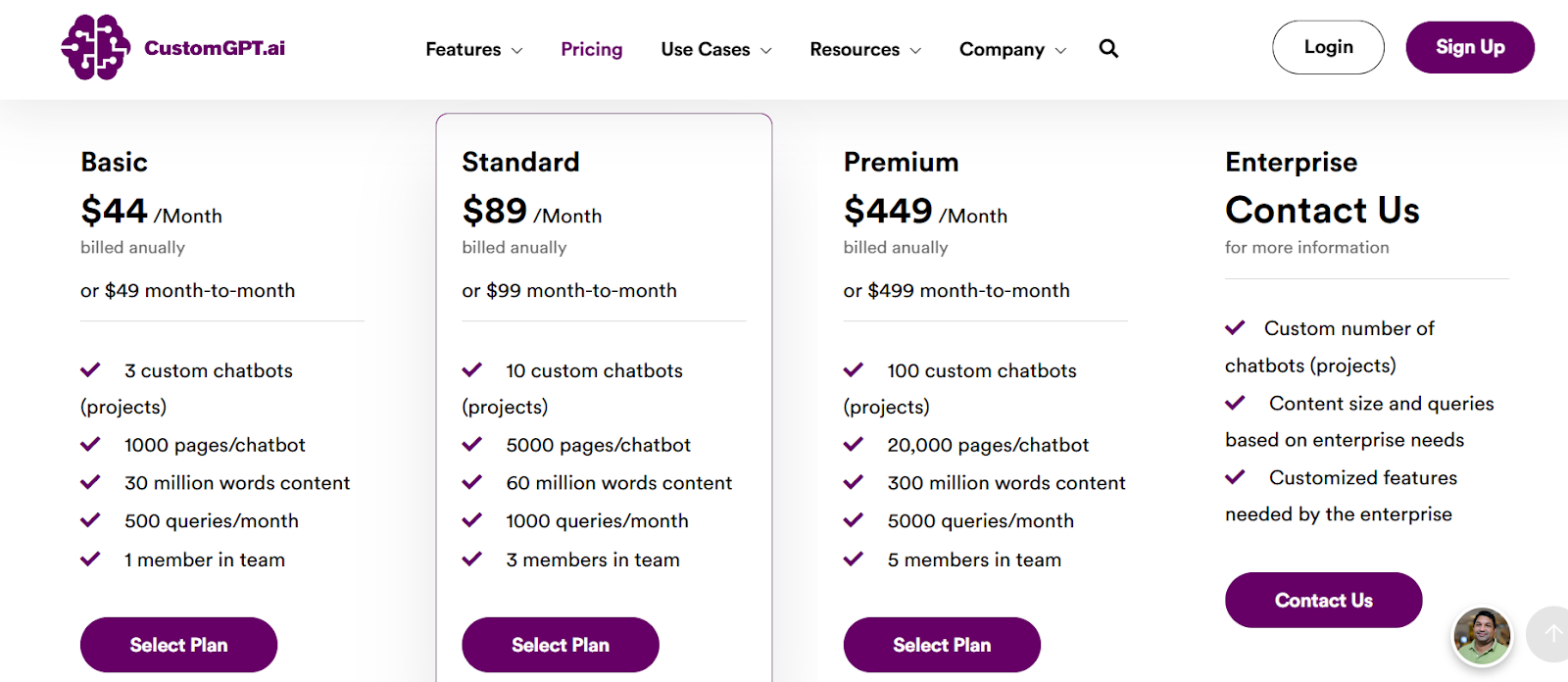
CustomGPT pricing
Why this page is commercially useful
These notes frame the article as a decision page, not just a background explainer.
Why this guide matters
CustomGPT has recently introduced an industry-first AI technology that lets you make money out of your expertise by building and selling personalized chatbots.
Best for
Start here if you are trying to understand a.i advancements before choosing specific tools or vendors.
Next action
Use the related app links below to turn the guide into an actual tool comparison instead of stopping at theory.
Relevant AI apps to evaluate next
These app pages give readers a practical follow-on step after the guide: compare the tools that fit the workflow described above.