
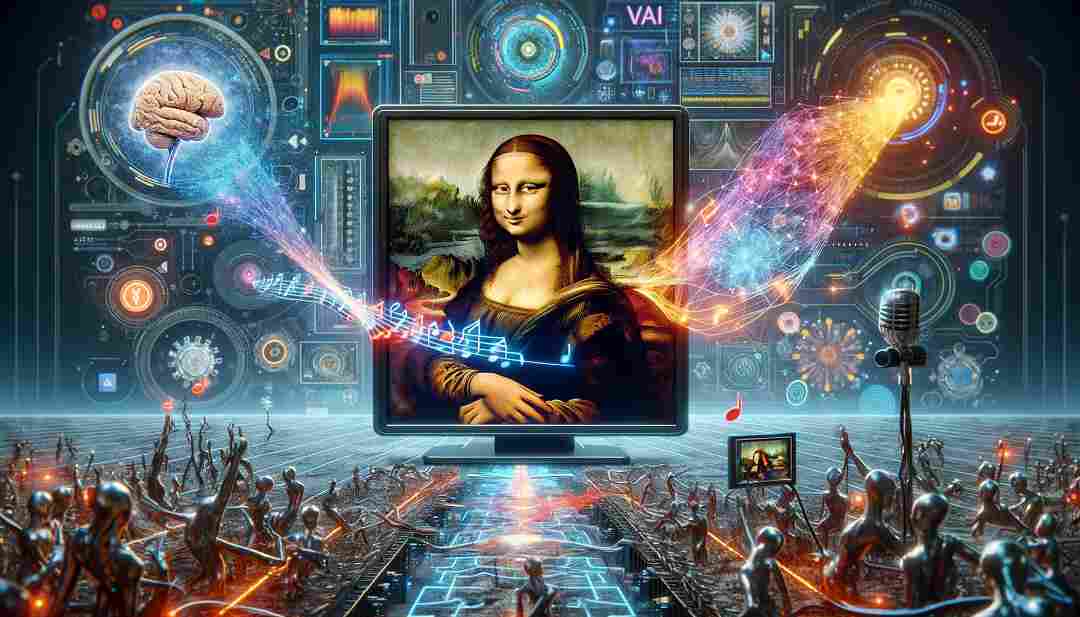
In a striking display of artificial intelligence capabilities, Microsoft has unveiled its new AI model, VASA-1, which can animate still images into realistic video sequences. This groundbreaking technology recently demonstrated its prowess by making the iconic painting of Mona Lisa lip-sync to Anne Hathaway's "Paparazzi," leaving the internet both amazed and amused. The video quickly went viral, sparking a mixture of laughter and awe across various social media platforms.
VASA-1, short for Video and Audio Synchronization for Animation, represents a significant leap in AI technology, particularly in the realm of digital media. Microsoft claims that this model can generate hyper-realistic videos of talking human faces, transforming a static photo into a dynamic animation. The model ensures that the lip movements are perfectly synchronized with the audio, and it incorporates expressive facial expressions and natural head movements to enhance the authenticity of the animations.
The viral video featuring the Mona Lisa not only showcases the technical capabilities of VASA-1 but also highlights the creative potential such technology holds. The demonstration has received widespread attention, garnering millions of views and becoming a topic of discussion for its humorous and innovative content. However, the reactions have not been solely of fascination and humor; some viewers expressed concerns about the potential misuse of such technology, especially in creating deepfakes.
"Creepy? Fascinating? For one thing, deepfake potential just grew exponentially…but opens up some interesting creative possibilities as well," commented one social media user, encapsulating the mixed feelings that many have about the advancing technology. Another user noted, "Deepfake Tech Just Took a Terrifying Leap Forward and it's more convincingly deceptive than we ever imagined," highlighting the ethical and security issues that come with such advancements.
Despite these concerns, Microsoft is optimistic about the potential applications of VASA-1. According to the company, the AI model is not just about creating novelty videos but also about enhancing the way we interact with digital content. For instance, the technology could revolutionize the film and entertainment industry, allowing for more creative and efficient production processes. Additionally, it could be used in virtual reality settings to create more immersive and interactive experiences.
Microsoft has emphasized that VASA-1 operates within a new framework designed to produce lifelike talking faces of virtual characters with high visual and affective accuracy. "VASA-1 is capable of not only producing lip movements that are exquisitely synchronized with the audio but also capturing a large spectrum of facial nuances and natural head motions," the company explained. This includes a holistic approach to facial dynamics and head movement generation that works in a specialized face latent space.
However, in light of the potential for misuse, Microsoft has stated that it has no immediate plans to release an online demo, API, product, or any additional implementation details until it can ensure that the technology will be used responsibly and within appropriate regulations.
As AI continues to integrate deeper into our lives, the balance between innovation and ethical responsibility remains a critical concern. While technologies like VASA-1 open new doors for creativity and interaction, they also necessitate a careful consideration of the implications they hold for privacy, security, and authenticity in the digital age.