
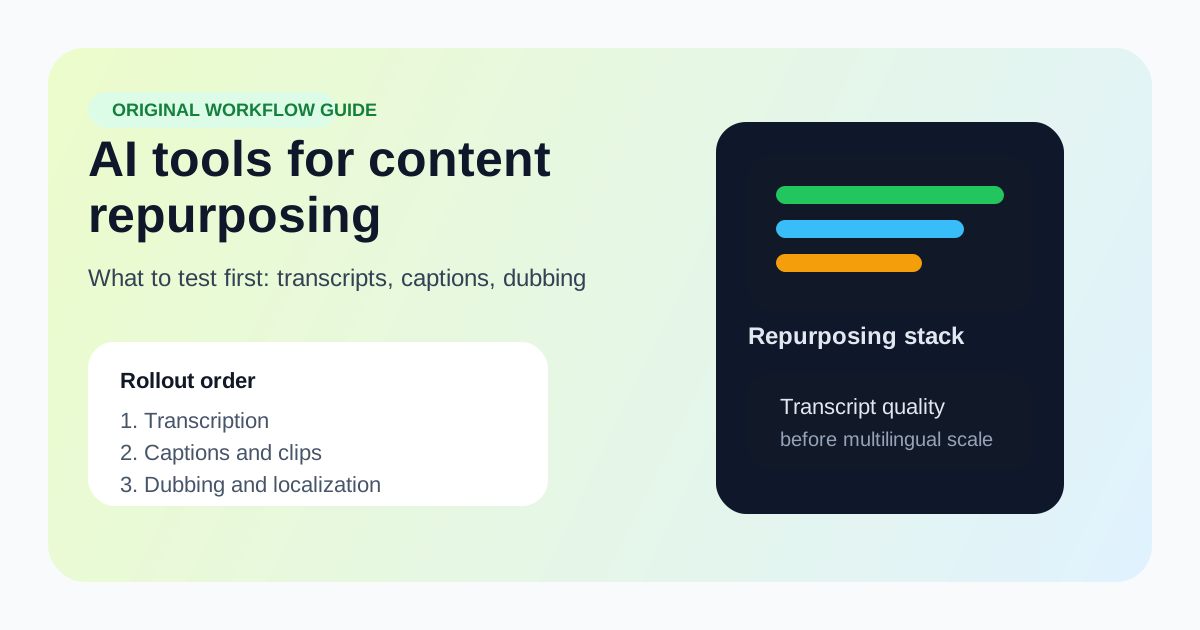
Transcription comes first
If the source material is audio or video, the fastest productivity win usually starts with accurate transcripts and speaker separation.
The first AI tools to test for content repurposing are the ones that remove production bottlenecks: transcription, clipping, captions, dubbing, and lightweight rewrite support. The right order is workflow-first, not feature-first.
Content repurposing is where many teams overbuy software. They stack transcription, subtitle, rewrite, and localization tools before they know where time is actually being lost. This page narrows the order of operations so the test plan matches the workflow.
These are the key points the page is trying to help the reader decide quickly.
If the source material is audio or video, the fastest productivity win usually starts with accurate transcripts and speaker separation.
Short-form publishing teams often gain more from clean caption workflows than from fancy generative editing features.
Dubbing and multilingual publishing matter after the base repurposing process is stable, not before.
The cleanest tool order depends on where content slows down after recording. Most teams should start with transcription and captions before moving into multilingual publishing.
| Tool | Use it first when | Why it helps | Next step after it works |
|---|---|---|---|
| Happy Scribe | Transcript quality and subtitle drafting are the main bottlenecks | Strong base layer for transcript-to-asset workflows | Add caption publishing or dubbing only after transcript quality is stable |
| Notta | Meetings, interviews, and notes are the primary source content | Fast route from spoken content into structured text | Use rewrite or clipping tools after transcript structure is reliable |
| SubtitleBee | Short-form clips and captioned social publishing matter most | Useful for turning long-form content into social-ready assets | Layer in dubbing or translation once the clip workflow is repeatable |
| Dubverse | You already have a working base workflow and now need localization | Adds multilingual reach after transcription and captions are under control | Expand language coverage gradually instead of translating everything at once |
If editing teams are waiting on transcripts, that is where the first AI tool should go. If social teams are stuck hand-captioning clips, start there instead. The right first tool is the one that removes delay from the current production chain.
This matters because repurposing stacks compound quickly. The more tools you add before fixing the core bottleneck, the harder it becomes to tell which subscription is actually creating output.
Track turnaround time from raw recording to publishable asset, correction time per output, and the number of final deliverables created from one source file. Those metrics tell you whether the stack is helping the business, not just whether the demo looked polished.
The best content repurposing tool is rarely the one with the most features. It is the one that increases useful output without increasing editor cleanup work.
These tool pages are the practical next step once the reader understands the workflow and wants to compare products.
A strong starting point for transcript and subtitle-heavy workflows.
Useful when the source material is mostly meetings, interviews, and spoken notes.
A direct fit for clip production and social caption workflows.
A better second-stage option once the base repurposing pipeline is working.
Fresh stories that reinforce why this topic keeps changing and where vendor or platform decisions are moving.
Use these GPT pages when a narrower task-specific workflow is enough and a full app would be overkill.
Usually transcription, because many downstream tasks depend on clean text before captions, edits, and multilingual publishing can move efficiently.
Usually no. Dubbing becomes valuable after the base content pipeline is stable and you are already creating repeatable assets worth translating.