For companies of all sizes, the use of artificial intelligence (AI) in marketing has changed the game. The integration of AI in marketing has led to significant advancements in personalization, automation, predictive analytics, and customer insights, ultimately shaping the way businesses interact with their target audience.
One of the most prominent impacts of AI in marketing is the ability to deliver personalized experiences at scale. AI-powered algorithms can analyze vast amounts of customer data, including browsing behavior, purchase history, and demographic information, to create highly targeted and personalized marketing campaigns. By understanding individual preferences and behaviors, businesses can tailor their messaging, product recommendations, and promotional offers to resonate with each customer on a personal level. This level of personalization not only enhances customer satisfaction but also drives higher conversion rates and customer loyalty.
Moreover, AI has empowered businesses to automate various marketing processes, streamlining repetitive tasks and allowing marketers to focus on more strategic initiatives. Chatbots, for example, powered by AI, can engage with customers in real-time, providing instant support, answering queries, and even facilitating transactions. This not only improves customer service but also enables businesses to engage with their audience 24/7, irrespective of time zones or geographical boundaries. Automated email marketing, content generation, and ad optimization are other areas where AI has significantly increased efficiency and effectiveness, freeing up human resources to work on creative and high-level marketing strategies.
AI's predictive analytics capabilities have also proven to be invaluable for businesses, enabling them to forecast trends, identify potential opportunities, and make data-driven decisions. By analyzing historical data and identifying patterns, AI can predict customer behaviors, market trends, and even potential churn, empowering businesses to proactively adjust their marketing strategies. This foresight allows businesses to allocate resources more effectively, optimize inventory management, and anticipate customer needs, ultimately leading to better business outcomes.
Furthermore, AI has transformed the way businesses gain insights into customer preferences and market trends. Sentiment analysis, for instance, allows businesses to understand public opinion about their brand and industry, helping them tailor their marketing messages accordingly. Social media listening powered by AI algorithms enables businesses to monitor conversations and trends, providing invaluable insights for product development, campaign optimization, and crisis management. By leveraging AI-driven analytics tools, businesses can gain a deeper understanding of their target audience, competitors, and market dynamics, allowing for more informed decision-making.
AI has become a game changer for businesses in the field of marketing by enabling personalized experiences at scale, automating repetitive tasks, providing predictive analytics, and offering valuable customer insights. As businesses continue to embrace AI technologies, they are better positioned to deliver impactful marketing campaigns, build stronger customer relationships, and drive sustainable growth in an increasingly competitive landscape. The strategic integration of AI in marketing has undoubtedly transformed the way businesses connect with their audience and drive business success.
Now let's understand what is an AI marketing tool in detail
Contents
- What is an AI marketing tool?
- The Power of AI Marketing Tools: Revolutionizing Business Growth
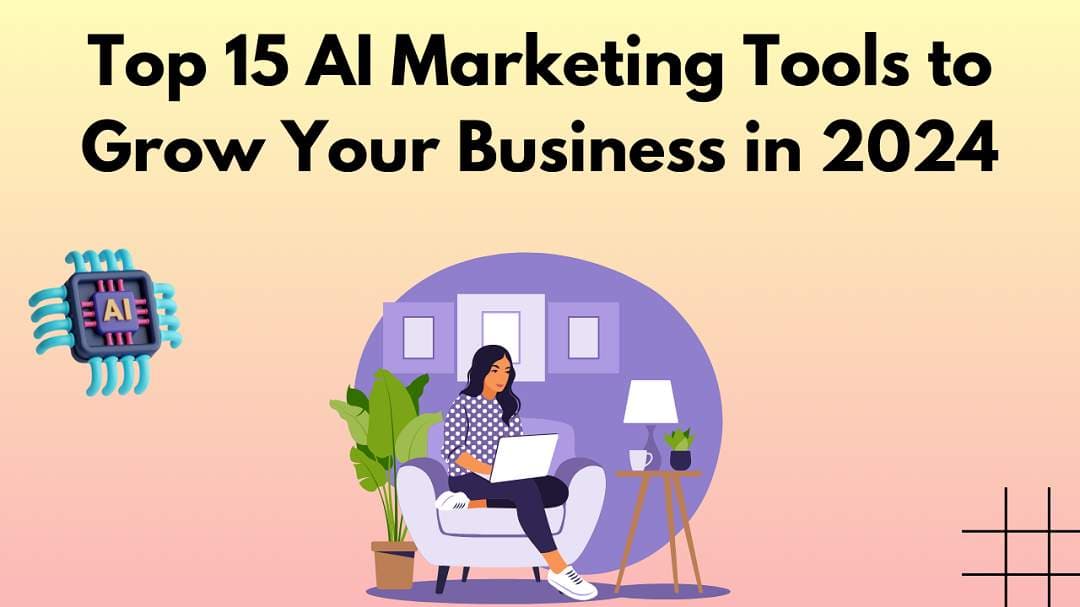
- Top 15 AI marketing tools to grow your business in 2024
What is an AI marketing tool?
Why this page is commercially useful
These notes frame the article as a decision page, not just a background explainer.
Why this guide matters
For companies of all sizes, the use of artificial intelligence (AI) in marketing has changed the game. The integration of AI in marketing has led to significant advancements in…
Best for
Start here if you are trying to understand a.i tools before choosing specific tools or vendors.
Next action
Use the related app links below to turn the guide into an actual tool comparison instead of stopping at theory.
Relevant AI apps to evaluate next
These app pages give readers a practical follow-on step after the guide: compare the tools that fit the workflow described above.