
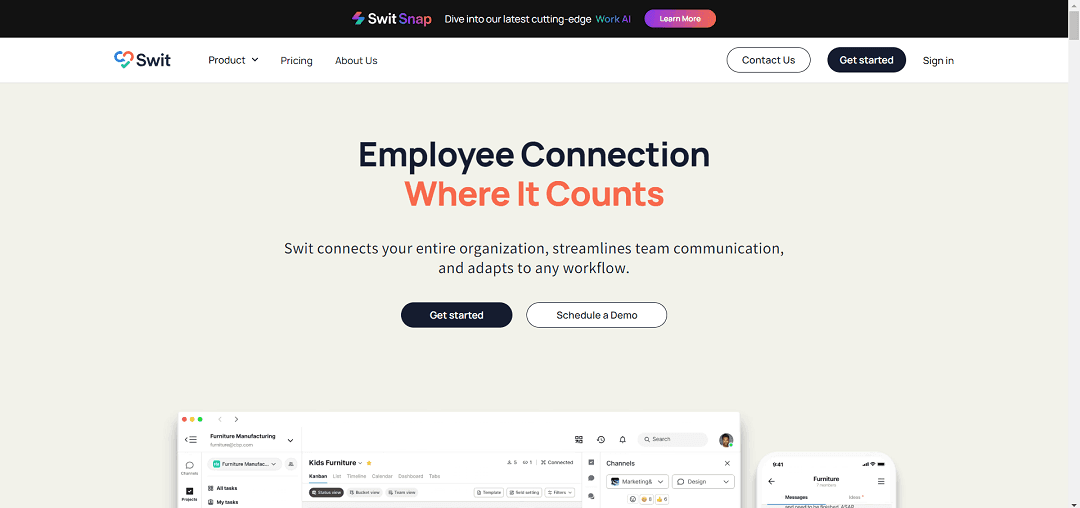
Swit represents a leap forward in how teams collaborate and manage projects, integrating essential tools into a single, streamlined platform. This innovation, especially with the release of Swit 2.0, provides a comprehensive solution that blends messaging, project management, and a wide variety of plug-ins and integrations. This strategy aims to tackle the inefficiency and time waste associated with switching between multiple apps, offering a cost-effective, flexible solution for teams of any size and budget. The evolution of Swit also extends to its brand identity, featuring a thoughtful redesign that better aligns the product with its mission. The introduction of a new logo—a heart split into three segments, each representing a key aspect of Swit's functionality—alongside a refreshed color palette, underlines the platform's commitment to enhancing team connectivity and collaboration. The rebranding efforts include an overhauled website design that more effectively communicates Swit's benefits and features through real-world examples and a visually appealing interface. Behind the scenes, Swit's powerful tech stack, incorporating tools like Intercom and Microsoft Clarity, underscores its commitment to providing a robust and user-friendly experience. With these updates, Swit continues to refine its approach to improving workplace efficiency, emphasizing a seamless integration of tools that support dynamic teamwork and project management. This ongoing dedication to innovation and user experience highlights Swit's role as a key player in transforming the landscape of team collaboration tools.
Swit
Swit represents a leap forward in how teams collaborate and manage projects, integrating essential tools into a single, streamlined platform. This innovation, especially with the release of Swit 2.0, provides a comprehensive solution that blends messaging, project management, and a wide variety of plug-ins and integrations. This strategy aims to tackle the inefficiency and time waste associated with switching between multiple apps, offering a cost-effective, flexible solution for teams of any size and budget. The evolution of Swit also extends to its brand identity, featuring a thoughtful redesign that better aligns the product with its mission. The introduction of a new logo—a heart split into three segments, each representing a key aspect of Swit's functionality—alongside a refreshed color palette, underlines the platform's commitment to enhancing team connectivity and collaboration. The rebranding efforts include an overhauled website design that more effectively communicates Swit's benefits and features through real-world examples and a visually appealing interface. Behind the scenes, Swit's powerful tech stack, incorporating tools like Intercom and Microsoft Clarity, underscores its commitment to providing a robust and user-friendly experience. With these updates, Swit continues to refine its approach to improving workplace efficiency, emphasizing a seamless integration of tools that support dynamic teamwork and project management. This ongoing dedication to innovation and user experience highlights Swit's role as a key player in transforming the landscape of team collaboration tools.
This page is meant to help with selection, not just discovery. Use it to decide whether the tool fits the workflow, what to compare next, and whether it deserves a real trial.
WhisperAiML take
These notes are here to make the page more useful as a buying and comparison surface.
Best fit
Use Swit when the main need is team management and you want a tool-specific page instead of a generic directory listing.
WhisperAiML take
Swit represents a leap forward in how teams collaborate and manage projects, integrating essential tools into a single, streamlined platform. This innovation, especially with th…
What to compare next
Compare Swit against Ace and Ayanza before deciding on price, setup speed, and workflow fit.
Related guides for this app category
Move from tool discovery into the evergreen explainers that help evaluate where this app fits, what workflow it supports, and what to compare it against.
Useful for design, image, visual generation, and creative-tool coverage.
Best fit for commerce, storefront, product-discovery, and merchant-support workflows.
Relevant for agencies, embedded AI products, and teams evaluating resellable AI surfaces.