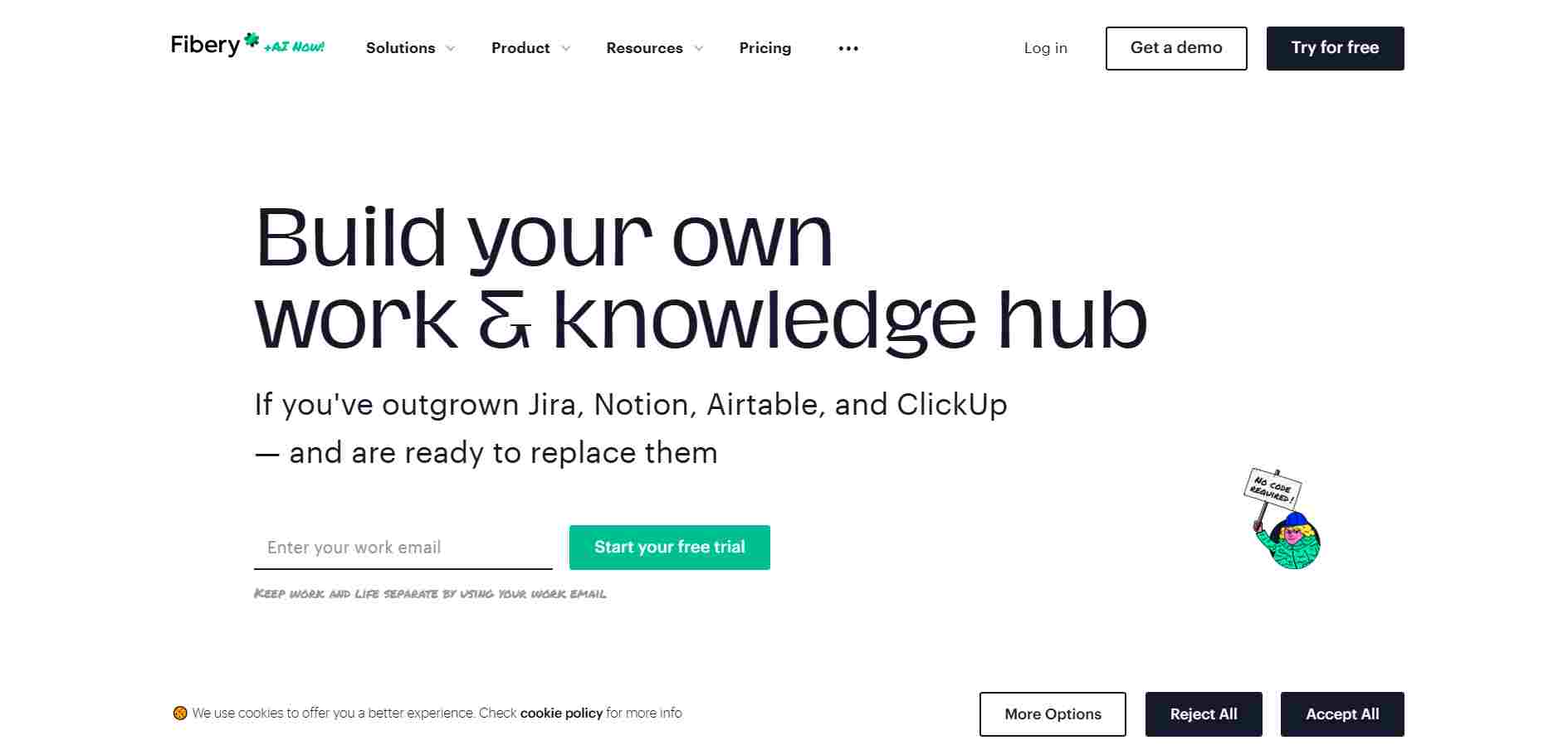
Fibery is a versatile, no-code platform designed to consolidate various work and knowledge management tools into a single, unified workspace. It appeals to a wide range of professionals, including product managers, software developers, and operations teams, by offering flexibility in process mapping, custom fields, databases, and relations. Fibery stands out for its ability to link structured data, like tables and kanban boards, with unstructured data, such as documents, thereby maintaining context across tasks and information. It promotes efficient collaboration by replacing multiple tools with one comprehensive solution, fostering better integration and insights from data through advanced, Tableau-like reporting capabilities. This platform encourages users to design their workflows uniquely to their needs, moving away from predefined workflows and terminologies. Fibery's approach is about empowering teams to build their own systems for data management and analysis, with a strong emphasis on customization and user-driven configuration for a diverse range of work environments. Fibery offers a flexible pricing model that caters to teams of varying sizes and needs, including a free tier tailored for small teams or individuals who are just getting started. As teams expand and require more advanced features and integrations, Fibery provides scalable paid plans. These plans are crafted to offer additional storage, advanced analytics, and customization options, ensuring they meet the requirements of larger teams or enterprises. For the most up-to-date and detailed pricing information, please visit their website.
Fibery
Fibery is a versatile, no-code platform designed to consolidate various work and knowledge management tools into a single, unified workspace. It appeals to a wide range of professionals, including product managers, software developers, and operations teams, by offering flexibility in process mapping, custom fields, databases, and relations. Fibery stands out for its ability to link structured data, like tables and kanban boards, with unstructured data, such as documents, thereby maintaining context across tasks and information. It promotes efficient collaboration by replacing multiple tools with one comprehensive solution, fostering better integration and insights from data through advanced, Tableau-like reporting capabilities. This platform encourages users to design their workflows uniquely to their needs, moving away from predefined workflows and terminologies. Fibery's approach is about empowering teams to build their own systems for data management and analysis, with a strong emphasis on customization and user-driven configuration for a diverse range of work environments. Fibery offers a flexible pricing model that caters to teams of varying sizes and needs, including a free tier tailored for small teams or individuals who are just getting started. As teams expand and require more advanced features and integrations, Fibery provides scalable paid plans. These plans are crafted to offer additional storage, advanced analytics, and customization options, ensuring they meet the requirements of larger teams or enterprises. For the most up-to-date and detailed pricing information, please visit their website.
This page is meant to help with selection, not just discovery. Use it to decide whether the tool fits the workflow, what to compare next, and whether it deserves a real trial.
WhisperAiML take
These notes are here to make the page more useful as a buying and comparison surface.
Best fit
Use Fibery when the main need is productivity and you want a tool-specific page instead of a generic directory listing.
WhisperAiML take
Fibery is a versatile, no-code platform designed to consolidate various work and knowledge management tools into a single, unified workspace. It appeals to a wide range of profe…
What to compare next
Compare Fibery against beams and Zefi.ai before deciding on price, setup speed, and workflow fit.
Related guides for this app category
Move from tool discovery into the evergreen explainers that help evaluate where this app fits, what workflow it supports, and what to compare it against.
Useful for design, image, visual generation, and creative-tool coverage.
Useful when a page is really about assistant selection, model tradeoffs, or replacing generic chat tooling.
Best fit for commerce, storefront, product-discovery, and merchant-support workflows.